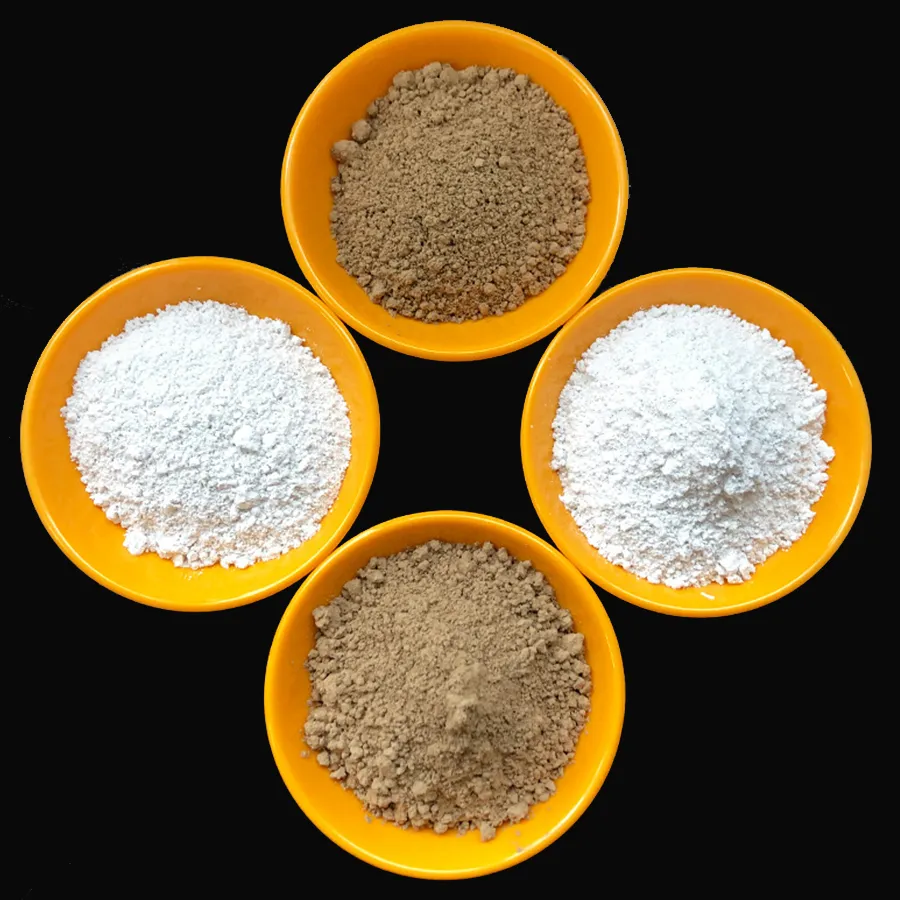
The Grey Hollow Beads Quietly Rewriting Lightweight Design If you work in concrete, coatings, or oil-well cementing, you’ve probably heard whispers about Cenosphere —the low-density, hollow microspheres that can turn dense mixes into something surprisingly agile. I’ve been on sites where a small dosage trimmed truckloads off logistics, no kidding. And when the supply is stable, engineers get brave with weight targets. Origin and what’s inside Sourced in Lubai Mountain Village, South Yanchuan, Lingshou County, Shijiazhuang, Hebei, China, Cenosphere beads are aluminosilicate hollow spheres recovered from coal fly ash. The product here is offered in 15, 20, 30, 40, 60, and 100 mesh—grey, clean, flow-friendly. In practice, the combination of low true density and high thermal stability is what keeps designers coming back. Product specifications (typical) Form Hollow aluminosilicate beads (grey) Available mesh 15 / 20 / 30 / 40 / 60 / 100 mesh True density ≈0.35–0.45 g/cm³ (ASTM D854/D792) Bulk density ≈0.25–0.40 g/cm³ (as shipped) SiO₂ / Al₂O₃ ≈55–60% / 25–35% (XRF) Fe₂O₃ ≤2.0% (typ.) Moisture / LOI ≤0.5% / ≤1.5% (ASTM C566) Softening point ≈1200–1400°C Thermal conductivity ≈0.11–0.14 W/m·K (ASTM C177) Sieve verification ASTM E11 How it’s made (and tested) Process flow, in short: controlled fly-ash classification → wet/dry separation → floatation (hollow fraction) → magnetic removal → wash & low-temp dry → sizing (ASTM E11 sieves) → blend & package. QA includes density checks (D854), moisture (C566), XRF chemistry, and thermal conductivity sampling (C177). Real-world service life depends on the matrix: coatings 5–10 years, cementitious systems 25–50 years, syntactic foams 10–20 years—your mileage may vary, obviously. Where it shines (use cases) Lightweight concrete/precast: replace part of sand; improved pumpability and thermal resistance (ASTM C618 compatibility). Oil-well cementing: density control with API cement systems for narrow ECD windows. Coatings, putties, and adhesives: sag control, sandability, lower VOC per liter of solids—many customers say it “feels” easier to spread. Polymer and rubber compounding: syntactic foam cores, buoyancy modules; surprisingly stiff for the weight. Refractory and insulation: stable up to ≈1200°C use temp. Cenosphere in action—quick snapshots: Precast panel plant cut unit weight by ≈18% at 8% replacement; 28‑day compressive ~38 MPa maintained (internal report). Offshore cement job reached 1.60 g/cm³ slurry density while meeting API thickening time and compressive targets. Sprayable filler mix saw ≈12% lower viscosity at same PVC with equal gloss after cure—operators were, frankly, relieved. Vendor landscape (quick read) Vendor Origin Mesh range True density Certs Lead time Customization Baifeng Mining Hebei, China 15–100 mesh ≈0.35–0.45 g/cm³ ISO 9001; RoHS/REACH-ready ≈2–4 weeks Silanes, blends, packaging Vendor B (India) India 20–200 mesh ≈0.40–0.55 g/cm³ ISO 9001 ≈3–6 weeks Limited coatings Vendor C (Eurasia) Eurasia 30–120 mesh ≈0.38–0.50 g/cm³ ISO 9001/14001 ≈4–8 weeks Custom density sorting Customization and packaging Typical options: tailored mesh blends, density sorting for ultra-light grades, silane treatments for polymers, and packaging in 25 kg bags or ≈1‑ton jumbo bags. Honestly, pre-blending to your mix ratio can save a lot of floor time. Cenosphere is routinely supported with COA, sieve curves, density/moisture data, and where required, REACH and RoHS statements. Some buyers order a small pilot lot first; that’s a smart move to lock down rheology targets before a plant-wide rollout. Standards and references ASTM C618 – Coal Fly Ash and Raw/Calcined Natural Pozzolan for Use in Concrete. https://www.astm.org/c0618 API Specification 10A – Cements and Materials for Well Cementing. https://www.api.org/products-and-services/standards/api-spec-10a ISO 9001 – Quality Management Systems. https://www.iso.org/iso-9001-quality-management.html ASTM E11 – Woven Wire Test Sieve Cloth and Test Sieves. https://www.astm.org/e0011 ASTM D854 – Specific Gravity of Soil Solids; and ASTM D792 – Density of Plastics. https://www.astm.org/d0854 | https://www.astm.org/d0792 ASTM C177 – Thermal Conductivity by Guarded-Hot-Plate. https://www.astm.org/c0177